
Alkaline earth metal facts for kids

The alkaline earth metals are a special group of metals found on the periodic table. Think of the periodic table as a big chart that organizes all the known chemical elements. These metals are in the second column of this chart.
They are similar to another group called the Alkali metals, but they don't react quite as strongly. This is because it takes more energy to remove their two outer electrons. Electrons are tiny particles that orbit the center of an atom. Because they are less reactive than alkali metals, they don't need to be kept in special ways, like stored in oil.
When these metals form ions, which are atoms with an electrical charge, they always have a charge of +2. Most alkaline earth metals are shiny and silver-colored. They are also soft metals. They react easily with elements called halogens (like chlorine) and with water to create different types of salts. They also form alkaline hydroxides, which are compounds that make water more basic. Many interesting minerals can be found in the Earth's crust that contain these metals.
The alkaline earth metals include:
Radium is special because it is very radioactive. This means it gives off energy in the form of radiation.
Contents
What are Alkaline Earth Metals?
Alkaline earth metals are a family of six chemical elements. They are found in Group 2 of the periodic table. This group includes beryllium, magnesium, calcium, strontium, barium, and radium. These elements share many similar properties. For example, they are all shiny, silver-white, and quite reactive.
Where are they found?
These metals are not usually found alone in nature. Instead, they are part of different compounds and minerals. For instance, calcium is a key part of bones and teeth. Magnesium is important for plants and animals. Beryllium is found in precious gemstones like emeralds.
How do they react?
Alkaline earth metals are known for being reactive. This means they easily combine with other elements. They tend to lose two electrons when they react. This makes them form ions with a positive charge of +2. They react with water to produce hydrogen gas and a metal hydroxide. They also react with halogens to form salts.
Common Uses of Alkaline Earth Metals
Each alkaline earth metal has unique uses:
- Beryllium is used to make strong, lightweight alloys. These are mixtures of metals. They are used in aircraft and spacecraft parts.
- Magnesium is used in fireworks and camera flashes because it burns brightly. It's also used in lightweight alloys for cars and planes.
- Calcium is vital for healthy bones and teeth. It is also used in building materials like cement and plaster.
- Strontium is used to make bright red colors in fireworks. It is also used in some types of glass.
- Barium is used in medical imaging. It helps doctors see organs like the stomach and intestines. It is also used in some types of paint.
- Radium was once used in luminous paints. However, because it is very radioactive, its use is now very limited.
| Group | 1 | 2 | 3 | 4 | 5 | 6 | 7 | 8 | 9 | 10 | 11 | 12 | 13 | 14 | 15 | 16 | 17 | 18 | |
|---|---|---|---|---|---|---|---|---|---|---|---|---|---|---|---|---|---|---|---|
| Hydrogen & alkali metals |
Alkaline earth metals | Triels | Tetrels | Pnictogens | Chalcogens | Halogens | Noble gases |
||||||||||||
| Period |
|||||||||||||||||||
| 2 | |||||||||||||||||||
| 3 | |||||||||||||||||||
| 4 | |||||||||||||||||||
| 5 | |||||||||||||||||||
| 6 |  |
||||||||||||||||||
| 7 |  |
||||||||||||||||||
|
|||||||||||||||||||
|
|||||||||||||||||||
Primordial From decay Synthetic Border shows natural occurrence of the element
- Ca: 40.078 — Abridged value (uncertainty omitted here)
- Po: [209] — mass number of the most stable isotope
Images for kids
-
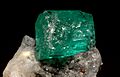
Emerald is a form of beryl, the principal mineral of beryllium.
-
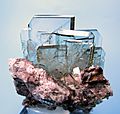
Barite, the material that was first found to contain barium.
_15.jpg)


See also
 In Spanish: Alcalinotérreos para niños
