
Europium facts for kids
 |
|||||||||||||||
| Europium | |||||||||||||||
|---|---|---|---|---|---|---|---|---|---|---|---|---|---|---|---|
| Pronunciation | /jʊəˈroʊpiəm/ |
||||||||||||||
| Appearance | silvery white, with a pale yellow tint; but rarely seen without oxide discoloration | ||||||||||||||
| Standard atomic weight Ar, std(Eu) | 151.964(1) | ||||||||||||||
| Europium in the periodic table | |||||||||||||||
|
|||||||||||||||
| Atomic number (Z) | 63 | ||||||||||||||
| Group | n/a | ||||||||||||||
| Period | period 6 | ||||||||||||||
| Block | f | ||||||||||||||
| Electron configuration | [Xe] 4f7 6s2 | ||||||||||||||
| Electrons per shell | 2, 8, 18, 25, 8, 2 | ||||||||||||||
| Physical properties | |||||||||||||||
| Phase at STP | solid | ||||||||||||||
| Melting point | 1099 K (826 °C, 1519 °F) | ||||||||||||||
| Boiling point | 1802 K (1529 °C, 2784 °F) | ||||||||||||||
| Density when liquid (at m.p.) | 5.13 g/cm3 | ||||||||||||||
| Heat of fusion | 9.21 kJ/mol | ||||||||||||||
| Heat of vaporization | 176 kJ/mol | ||||||||||||||
| Molar heat capacity | 27.66 J/(mol·K) | ||||||||||||||
Vapor pressure
|
|||||||||||||||
| Atomic properties | |||||||||||||||
| Oxidation states | +1, +2, +3 (a mildly basic oxide) | ||||||||||||||
| Electronegativity | Pauling scale: 1.2 | ||||||||||||||
| Ionization energies |
|
||||||||||||||
| Atomic radius | empirical: 180 pm | ||||||||||||||
| Covalent radius | 198±6 pm | ||||||||||||||
 |
|||||||||||||||
| Other properties | |||||||||||||||
| Natural occurrence | primordial | ||||||||||||||
| Crystal structure | body-centered cubic (bcc)
 |
||||||||||||||
| Thermal conductivity | est. 13.9 W/(m⋅K) | ||||||||||||||
| Electrical resistivity | poly: 0.900 µΩ⋅m (at r.t.) | ||||||||||||||
| Magnetic ordering | paramagnetic | ||||||||||||||
| Molar magnetic susceptibility | +34000.0×10−6 cm3/mol | ||||||||||||||
| Young's modulus | 18.2 GPa | ||||||||||||||
| Shear modulus | 7.9 GPa | ||||||||||||||
| Bulk modulus | 8.3 GPa | ||||||||||||||
| Poisson ratio | 0.152 | ||||||||||||||
| Vickers hardness | 165–200 MPa | ||||||||||||||
| CAS Number | 7440-53-1 | ||||||||||||||
| History | |||||||||||||||
| Naming | after Europe | ||||||||||||||
| Discovery | Eugène-Anatole Demarçay (1896) | ||||||||||||||
| First isolation | 1937 | ||||||||||||||
|
|||||||||||||||
Europium is a special chemical element. Its symbol is Eu, and its atomic number is 63. It belongs to a family of metals called the lanthanide group. Europium looks shiny and silvery-white when clean. It is one of the rarest of all the rare-earth elements found on Earth.
Contents
Amazing Physical and Chemical Features
Europium is a very soft rare-earth metal. It is ductile, which means you can bend it without breaking it. You can even cut pure europium with a simple kitchen knife. Its hardness is like soft lead. Inside its atoms, its electron configuration makes it act differently from its neighbors. Europium atoms arrange themselves into a body-centered cubic structure under normal room conditions.
Europium is the most active metal among the lanthanide elements. It is an electropositive metal that loves to join with other elements. When left in open air, it quickly reacts with oxygen to make europium(III) oxide. It also reacts with water to release hydrogen gas. Europium easily combines with every halogen element too. In water, it behaves like a hard Lewis acid. Chemists look at its two main forms, known as the +2 and +3 oxidation state levels. In the +2 form, it acts as a reducing agent because it gives away electrons.
Glowing Compounds of Europium


Europium can build many kinds of compounds. Europium(II) oxide is a special semiconductor that can become ferromagnetic when cold. Another compound, called europium(III) chloride, can shine brightly under special lights.
Europium compounds are famous for their phosphorescence. When you shine ultraviolet light on them, they absorb the energy and glow. Some europium compounds use an antenna effect, where parts catch light energy and pass it along.
History of Discovery
Scientists discovered europium through long detective work. In 1803, chemists discovered cerium. Over time, they realized that other elements were hiding inside it. Scientist Carl Gustaf Mosander separated new parts, and later researchers found praseodymium and neodymium. In 1879, chemist Paul Émile Lecoq de Boisbaudran separated samarium. Later, he also found gadolinium.
In 1885, a scientist named William Crookes noticed an odd glow in test samples. Finally, in 1901, French chemist Eugène-Anatole Demarçay proved that europium was truly a brand-new element. He named it after the continent of Europe. Later, in 1937, scientists Wilhelm Klemm and Heinrich Bommer made the first pure metal pieces.
Where It Comes From and Everyday Uses
Europium never sits alone in nature. Miners dig it up inside rocks like bastnäsite, monazite, loparite-(Ce), and xenotime. Monazite can also contain thorium and yttrium. Huge mines, such as the Bayan Obo deposit, dig up these rare minerals.
Europium is used to make brilliant red light inside older colour television screens. It works as a bright phosphor inside energy-saving fluorescent lamps. Europium is also added to the paper money of the euro currency to prevent counterfeiting.
Images for kids
-
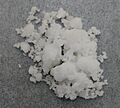
Europium(III) chloride sample
-
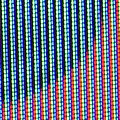
Europium glowing in TV screens
-
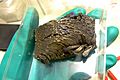
Pure europium kept safe inside a glove box
-
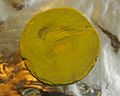
Europium tarnishes quickly when touched by air
-
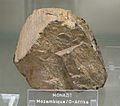
Monazite rock
-
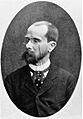
Eugène-Anatole Demarçay found europium.


See also
 In Spanish: Europio para niños
