
Lutetium facts for kids

Lutetium is a chemical element with the chemical symbol Lu. It has the atomic number 71. This means each atom of lutetium has 71 protons in its center. It is a shiny, silver-white metal.
In chemistry, lutetium is often grouped with other metal elements called transition metals. It is also considered the last element in the lanthanide series. The lanthanides are a special group of 15 similar metallic elements found in the Periodic Table. Lutetium shares many physical properties with these elements.
Contents
What is Lutetium?
Lutetium is a rare and valuable metal. It is known for being very dense and having a high melting point. This means it takes a lot of heat to turn solid lutetium into a liquid. It is also quite hard, which makes it useful for certain jobs.
Where is Lutetium Found?
Lutetium is not found by itself in nature. Instead, it is usually mixed with other rare earth elements in minerals. One of the main minerals where lutetium can be found is called Monazite. This mineral is mined in places like China, the United States, Brazil, India, and Australia. Getting pure lutetium from these minerals is a difficult and expensive process.
Uses of Lutetium
Even though lutetium is rare, it has some important uses, especially in high-tech areas.
Medical Uses
One of the most exciting uses of lutetium is in medicine. A special form of lutetium, called Lutetium-177, is used in cancer treatment. It can help doctors find and treat certain types of cancer, like neuroendocrine tumors and prostate cancer. This is a type of radiation therapy that targets cancer cells specifically.
Other Uses
Lutetium is also used in some advanced technologies:
- Catalysts: It can act as a catalyst in some chemical reactions. Catalysts help speed up reactions without being used up themselves.
- High-tech materials: Lutetium is sometimes used in making special alloys and ceramics. These materials are used in things like X-ray detectors and certain types of lighting.
- Research: Because of its unique properties, lutetium is also used in scientific research to study new materials and technologies.
Properties of Lutetium
Lutetium is a stable element, meaning it does not easily react with other substances. It is resistant to corrosion, which means it doesn't rust easily.
Physical Properties
- Appearance: Shiny, silver-white metal.
- Density: Very dense, meaning a small amount of it weighs a lot.
- Melting Point: High, around 1,663 °C (3,025 °F).
- Boiling Point: Very high, around 3,402 °C (6,156 °F).
- Hardness: Relatively hard for a metal.
Chemical Properties
- Reactivity: Not very reactive, especially compared to other rare earth metals.
- Oxidation State: Its most common oxidation state is +3. This means it tends to lose three electrons when it forms chemical bonds.
Related pages
| Group | 1 | 2 | 3 | 4 | 5 | 6 | 7 | 8 | 9 | 10 | 11 | 12 | 13 | 14 | 15 | 16 | 17 | 18 | |
|---|---|---|---|---|---|---|---|---|---|---|---|---|---|---|---|---|---|---|---|
| Hydrogen & alkali metals |
Alkaline earth metals | Triels | Tetrels | Pnictogens | Chalcogens | Halogens | Noble gases |
||||||||||||
| Period |
|||||||||||||||||||
| 2 | |||||||||||||||||||
| 3 | |||||||||||||||||||
| 4 | |||||||||||||||||||
| 5 | |||||||||||||||||||
| 6 |  |
||||||||||||||||||
| 7 |  |
||||||||||||||||||
|
|||||||||||||||||||
|
|||||||||||||||||||
Primordial From decay Synthetic Border shows natural occurrence of the element
- Ca: 40.078 — Abridged value (uncertainty omitted here)
- Po: [209] — mass number of the most stable isotope
Images for kids
-
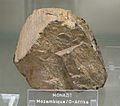
Monazite, a mineral where lutetium is found.

See also
 In Spanish: Lutecio para niños
