
Global Innovation Index facts for kids

Report cover of the Global Innovation Index Report 2025
|
|
|
Abbreviated title (ISO 4)
|
Glob. Innov. Index |
|---|---|
| Language | English, French, Italian, Spanish, Arabic, Chinese, Russian, German, Korean, Portuguese, Japanese |
| Publication details | |
| Publisher |
World Intellectual Property Organization
|
|
Publication history
|
2007–present |
| Frequency | Annual |
| License | CC BY 4.0 |
| Indexing | |
| ISSN | 2263-3693 |
| Links | |
|
|

The Global Innovation Index (GII) is a yearly report. It ranks countries based on how good they are at innovation. Innovation means creating new ideas, products, or ways of doing things. The World Intellectual Property Organization (WIPO) publishes this important report. It helps us understand which countries are leading the way in new inventions and ideas.
Contents
How the Global Innovation Index Started
The Global Innovation Index began in 2007. It was created by Soumitra Dutta. It started with the help of INSEAD, a business school, and World Business magazine. The main goal was to track how countries innovate.
How Innovation is Measured
The Global Innovation Index uses a special method to rank countries. It looks at two main parts to measure innovation:
- Innovation Input Index: This measures things that help innovation. For example, how much a country invests in education or research.
- Innovation Output Index: This measures the results of innovation. For example, how many new patents or creative products a country produces.
Each part has smaller sections called "pillars." These pillars look at different aspects of innovation. Experts combine all these scores to get a final ranking. Governments around the world use this index. They learn how to improve their country's ability to innovate. The General Assembly of the United Nations even mentioned it. They see it as important for sustainable development.
Special Focus Themes
Every two years, the Global Innovation Index picks a special theme. This theme explores a specific area of innovation. For example, in 2020, the theme was about "Who will pay for innovation?" This helped people understand how new ideas get funding. Other themes have looked at new ideas in health, the environment, and food. These themes help us think deeply about different kinds of innovation.
Top Innovators in 2025

The 2025 Global Innovation Index ranked 139 countries. To be included, countries needed enough information. This year, the index used 78 different ways to measure innovation. These measurements help create a fair ranking.
Here are the top countries for innovation in 2025:
| Rank | Country and region | Score | Income group |
|---|---|---|---|
| 1 |  Switzerland Switzerland |
66.0 | High-income |
| 2 |  Sweden Sweden |
62.6 | High-income |
| 3 |  United States United States |
61.7 | High-income |
| 4 |  South Korea South Korea |
60.0 | High-income |
| 5 |  Singapore Singapore |
59.9 | High-income |
| 6 |  United Kingdom United Kingdom |
59.1 | High-income |
| 7 |  Finland Finland |
57.7 | High-income |
| 8 |  Netherlands Netherlands |
57.0 | High-income |
| 9 |  Denmark Denmark |
56.9 | High-income |
| 10 |  China China |
56.6 | Upper middle-income |
| 11 |  Germany Germany |
55.5 | High-income |
| 12 |  Japan Japan |
53.6 | High-income |
| 13 |  France France |
53.4 | High-income |
| 14 |  Israel Israel |
52.3 | High-income |
| 15 |  Hong Kong Hong Kong |
51.5 | High-income |
| 16 |  Estonia Estonia |
51.1 | High-income |
| 17 |  Canada Canada |
51.1 | High-income |
| 18 |  Ireland Ireland |
50.4 | High-income |
| 19 |  Austria Austria |
50.1 | High-income |
| 20 |  Norway Norway |
49.2 | High-income |
| 21 |  Belgium Belgium |
48.5 | High-income |
| 22 |  Australia Australia |
48.0 | High-income |
| 23 |  Luxembourg Luxembourg |
47.3 | High-income |
| 24 |  Iceland Iceland |
47.0 | High-income |
| 25 |  New Zealand New Zealand |
45.5 | High-income |
| 26 |  Cyprus Cyprus |
45.5 | High-income |
| 27 |  Malta Malta |
45.4 | High-income |
| 28 |  Italy Italy |
44.9 | High-income |
| 29 |  Spain Spain |
44.6 | High-income |
| 30 |  United Arab Emirates United Arab Emirates |
44.2 | High-income |
| 31 |  Portugal Portugal |
43.9 | High-income |
| 32 |  Czech Republic Czech Republic |
42.0 | High-income |
| 33 |  Lithuania Lithuania |
40.8 | High-income |
| 34 |  Malaysia Malaysia |
40.6 | Upper middle-income |
| 35 |  Slovenia Slovenia |
40.1 | High-income |
| 36 |  Hungary Hungary |
40.0 | High-income |
| 37 |  Bulgaria Bulgaria |
39.1 | High-income |
| 38 |  India India |
38.2 | Lower middle-income |
| 39 |  Poland Poland |
37.7 | High-income |
| 40 |  Croatia Croatia |
37.7 | High-income |
| 41 |  Latvia Latvia |
37.5 | High-income |
| 42 |  Greece Greece |
37.4 | High-income |
| 43 |  Turkey Turkey |
37.2 | High-income |
| 44 |  Vietnam Vietnam |
37.1 | Lower middle-income |
| 45 |  Thailand Thailand |
36.7 | Upper middle-income |
| 46 |  Saudi Arabia Saudi Arabia |
36.0 | High-income |
| 47 |  Slovakia Slovakia |
35.5 | High-income |
| 48 |  Qatar Qatar |
34.6 | High-income |
| 49 |  Romania Romania |
34.3 | High-income |
| 50 |  Philippines Philippines |
33.6 | Lower middle-income |
| 51 |  Chile Chile |
33.1 | High-income |
| 52 |  Brazil Brazil |
32.9 | Upper middle-income |
| 53 |  Mauritius Mauritius |
32.5 | Upper middle-income |
| 54 |  Serbia Serbia |
31.7 | Upper middle-income |
| 55 |  Indonesia Indonesia |
31.3 | Upper middle-income |
| 56 |  Georgia Georgia |
31.2 | Upper middle-income |
| 57 |  Morocco Morocco |
31.1 | Lower middle-income |
| 58 |  Mexico Mexico |
30.5 | Upper middle-income |
| 59 |  Armenia Armenia |
30.5 | Upper middle-income |
| 60 |  Russia Russia |
30.3 | High-income |
| 61 |  South Africa South Africa |
30.1 | Upper middle-income |
| 62 |  Bahrain Bahrain |
30.0 | High-income |
| 63 |  Macedonia Macedonia |
29.8 | Upper middle-income |
| 64 |  Montenegro Montenegro |
29.8 | Upper middle-income |
| 65 |  Jordan Jordan |
29.7 | Lower middle-income |
| 66 |  Ukraine Ukraine |
29.7 | Lower middle-income |
| 67 |  Albania Albania |
29.6 | Upper middle-income |
| 68 |  Uruguay Uruguay |
28.8 | High-income |
| 69 |  Oman Oman |
28.7 | High-income |
| 70 |  Iran Iran |
28.5 | Lower middle-income |
| 71 |  Colombia Colombia |
28.5 | Upper middle-income |
| 72 |  Costa Rica Costa Rica |
28.4 | High-income |
| 73 |  Kuwait Kuwait |
28.2 | High-income |
| 74 |  Moldova Moldova |
27.4 | Upper middle-income |
| 75 |  Seychelles Seychelles |
27.2 | High-income |
| 76 |  Tunisia Tunisia |
27.0 | Lower middle-income |
| 77 |  Argentina Argentina |
26.8 | Upper middle-income |
| 78 |  Mongolia Mongolia |
26.7 | Upper middle-income |
| 79 |  Uzbekistan Uzbekistan |
26.5 | Lower middle-income |
| 80 |  Peru Peru |
26.5 | Upper middle-income |
| 81 |  Kazakhstan Kazakhstan |
26.3 | Upper middle-income |
| 82 |  Panama Panama |
25.9 | High-income |
| 83 |  Jamaica Jamaica |
25.2 | Upper middle-income |
| 84 |  Barbados Barbados |
25.1 | High-income |
| 85 |  Belarus Belarus |
25.1 | Upper middle-income |
| 86 |  Egypt Egypt |
24.7 | Lower middle-income |
| 87 |  Botswana Botswana |
24.6 | Upper middle-income |
| 88 |  Brunei Brunei |
24.5 | High-income |
| 89 |  Senegal Senegal |
23.8 | Lower middle-income |
| 90 |  Lebanon Lebanon |
23.6 | Lower middle-income |
| 91 |  Namibia Namibia |
23.5 | Lower middle-income |
| 92 |  Bosnia and Herzegovina Bosnia and Herzegovina |
23.4 | Upper middle-income |
| 93 |  Sri Lanka Sri Lanka |
22.9 | Lower middle-income |
| 94 |  Azerbaijan Azerbaijan |
22.9 | Upper middle-income |
| 95 |  Cape Verde Cape Verde |
22.6 | Lower middle-income |
| 96 |  Kyrgyzstan Kyrgyzstan |
22.6 | Lower middle-income |
| 97 |  Dominican Republic Dominican Republic |
22.6 | Upper middle-income |
| 98 |  El Salvador El Salvador |
22.2 | Upper middle-income |
| 99 |  Pakistan Pakistan |
22.1 | Lower middle-income |
| 100 |  Cambodia Cambodia |
21.9 | Lower middle-income |
| 101 |  Ghana Ghana |
21.9 | Lower middle-income |
| 102 |  Paraguay Paraguay |
21.4 | Upper middle-income |
| 103 |  Kenya Kenya |
21.4 | Lower middle-income |
| 104 |  Rwanda Rwanda |
21.1 | Low-income |
| 105 |  Nigeria Nigeria |
21.1 | Lower middle-income |
| 106 |  Bangladesh Bangladesh |
21.0 | Lower middle-income |
| 107 |  Nepal Nepal |
20.2 | Lower middle-income |
| 108 |  Tajikistan Tajikistan |
20.2 | Lower middle-income |
| 109 |  Laos Laos |
20.1 | Lower middle-income |
| 110 |  Côte d'Ivoire Côte d'Ivoire |
19.7 | Lower middle-income |
| 111 |  Bolivia Bolivia |
19.6 | Lower middle-income |
| 112 |  Zambia Zambia |
19.6 | Lower middle-income |
| 113 |  Ecuador Ecuador |
19.5 | Upper middle-income |
| 114 |  Trinidad and Tobago Trinidad and Tobago |
19.3 | High-income |
| 115 |  Algeria Algeria |
18.9 | Lower middle-income |
| 116 |  Cameroon Cameroon |
18.2 | Lower middle-income |
| 117 |  Togo Togo |
18.1 | Low-income |
| 118 |  Benin Benin |
17.8 | Lower middle-income |
| 119 |  Honduras Honduras |
17.7 | Lower middle-income |
| 120 |  Madagascar Madagascar |
17.6 | Low-income |
| 121 |  Tanzania Tanzania |
17.5 | Low-income |
| 122 |  Myanmar Myanmar |
17.3 | Lower middle-income |
| 123 |  Guatemala Guatemala |
17.1 | Upper middle-income |
| 124 |  Uganda Uganda |
17.1 | Lower middle-income |
| 125 |  Malawi Malawi |
16.0 | Low-income |
| 126 |  Burkina Faso Burkina Faso |
15.9 | Low-income |
| 127 |  Burundi Burundi |
15.8 | Low-income |
| 128 |  Mozambique Mozambique |
15.4 | Low-income |
| 129 |  Zimbabwe Zimbabwe |
15.4 | Lower middle-income |
| 130 |  Nicaragua Nicaragua |
15.4 | Lower middle-income |
| 131 |  Mauritania Mauritania |
15.4 | Low-income |
| 132 |  Lesotho Lesotho |
14.9 | Low-income |
| 133 |  Guinea Guinea |
14.9 | Lower middle-income |
| 134 |  Ethiopia Ethiopia |
14.4 | Low-income |
| 135 |  Mali Mali |
14.0 | Low-income |
| 136 |  Venezuela Venezuela |
13.7 | Lower middle-income |
| 137 |  Republic of the Congo Republic of the Congo |
13.6 | Lower middle-income |
| 138 |  Angola Angola |
13.0 | Lower middle-income |
| 139 |  Niger Niger |
11.9 | Low-income |
See also
- International Innovation Index
Images for kids
-
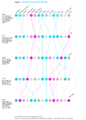
This chart shows how the top 10 countries in the Global Innovation Index changed between 2018 and 2022.

