
Post-transition metal facts for kids
Post-transition metals, also known as poor metals, are a special group of metals you can find on the periodic table. They are located to the right of the transition metals. You might sometimes hear that elements like germanium, antimony, and polonium are included, even though they are usually called metalloids (which are kind of in-between metals and non-metals).
These metals are different from other metals in a few ways. They generally have higher electronegativity than transition metals, which means they pull electrons a bit more strongly. Their melting points are also lower, so they melt more easily. Plus, they are usually softer than many other metals. Think of metals like Lead and Tin – they are good examples of poor metals.
Contents
What are Post-Transition Metals?
Post-transition metals are a specific section of the periodic table that includes elements like Aluminium, Gallium, Indium, Tin, Thallium, Lead, Bismuth, Zinc, and Cadmium. They are called "poor metals" because their properties are not as strong or typical as the "true" metals, like the transition metals.
Where Do We Find These Metals?
You can find these metals in different groups and periods on the periodic table. For example, Aluminium is in Group 13, while Tin and Lead are in Group 14. Zinc and Cadmium are in Group 12. These groups help us understand how elements behave.
What Makes Them Special?
Post-transition metals have some unique features:
- Softer than other metals: They are generally not as hard as many other metals, making them easier to shape or cut.
- Lower melting points: Many of them melt at lower temperatures compared to transition metals. For example, Gallium can even melt in your hand!
- Higher electronegativity: This means their atoms tend to attract electrons more strongly than typical metals.
- Good conductors: Like most metals, they are good at conducting both heat and electricity.
Common Examples of Poor Metals
Here are some well-known post-transition metals and how they are used:
- Aluminium: This is a very common metal, used for making soda cans, airplane parts, and even cooking foil because it's light and doesn't rust easily.
- Tin: You might find tin used as a coating for steel cans to prevent rust, or in alloys like bronze.
- Lead: Historically, lead was used in pipes and paints, but now its use is limited due to health concerns. It's still used in car batteries and some industrial applications.
- Zinc: Zinc is often used to coat steel (a process called galvanizing) to protect it from rust. It's also found in batteries.
- Gallium: This metal has a very low melting point, so it can melt at room temperature. It's used in electronics, like in LED lights and some computer chips.
- Indium: Indium is used in touchscreens and flat-panel displays because it's transparent and conducts electricity.
- Bismuth: This metal is often used in medicines for upset stomachs and in some cosmetics. It's also used in alloys that melt at low temperatures.
-
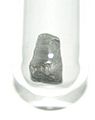
Thallium
-
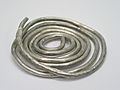
Indium
-
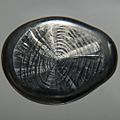
Lead
-
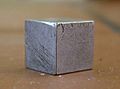
Tin
-
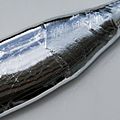
Gallium


| Group | 1 | 2 | 3 | 4 | 5 | 6 | 7 | 8 | 9 | 10 | 11 | 12 | 13 | 14 | 15 | 16 | 17 | 18 | |
|---|---|---|---|---|---|---|---|---|---|---|---|---|---|---|---|---|---|---|---|
| Hydrogen & alkali metals |
Alkaline earth metals | Triels | Tetrels | Pnictogens | Chalcogens | Halogens | Noble gases |
||||||||||||
| Period |
|||||||||||||||||||
| 2 | |||||||||||||||||||
| 3 | |||||||||||||||||||
| 4 | |||||||||||||||||||
| 5 | |||||||||||||||||||
| 6 |  |
||||||||||||||||||
| 7 |  |
||||||||||||||||||
|
|||||||||||||||||||
|
|||||||||||||||||||
Primordial From decay Synthetic Border shows natural occurrence of the element
- Ca: 40.078 — Abridged value (uncertainty omitted here)
- Po: [209] — mass number of the most stable isotope
See also
 In Spanish: Metal del bloque p para niños
