
Group 15 element facts for kids
The Group 15 elements, also known as pnictogens, are a special family of elements found on the periodic table. This group includes five different elements: Nitrogen, Phosphorus, Arsenic, Antimony, and Bismuth.
These elements have many different properties. For example, nitrogen is a gas that doesn't react much. Phosphorus is a solid that can be white or red and is quite reactive. Arsenic and antimony are semimetals, meaning they have properties of both metals and nonmetals. Bismuth is a true metal.
All Group 15 elements share one important thing: they each have 5 valence electrons. These are the electrons in their outermost shell, which are involved in forming chemical bonds. Because of these 5 valence electrons, most of them tend to form chemical compounds where they either gain 3 electrons (making them -3) or lose 5 electrons (making them +5).
Contents
What are Pnictogens?
The word "pnictogen" comes from a Greek word meaning "to choke." This name was first used for nitrogen, which is the main gas in the air we breathe. If there's only nitrogen, you can't breathe, which is why it was called "choking gas."
This group is also sometimes called Group V elements or Group VB elements. They are found in the fifth column from the right on the periodic table.
Meet the Pnictogens
Let's take a closer look at each of the elements in Group 15. They are all very different!
Nitrogen: The Air We Breathe
Nitrogen is a colorless and odorless gas. It makes up about 78% of the air around us! It's not very reactive, which means it doesn't easily combine with other elements.
Nitrogen is super important for life. It's a key part of proteins and DNA, which are the building blocks of all living things. Farmers use nitrogen in fertilizers to help plants grow strong. It's also used to make ammonia, which is a common chemical.
Phosphorus: The Light Bearer
Phosphorus is a very reactive nonmetal. It can be found in different forms, like white phosphorus or red phosphorus. White phosphorus glows in the dark and can even catch fire in the air! Because it's so reactive, it's usually stored under water.
Phosphorus is vital for life, just like nitrogen. It's a part of our bones, teeth, and DNA. It's also used in matches, fireworks, and some detergents.
Arsenic: A Tricky Semimetal
Arsenic is a semimetal, which means it has some properties of metals and some of nonmetals. It's known for being highly toxic, meaning it can be very harmful if you come into contact with it.
Even though it's toxic, arsenic has some uses. It's sometimes used in small amounts in semiconductors for electronics. In the past, it was used in pesticides and some medicines, but these uses are now rare due to its danger.
Antimony: Another Semimetal
Antimony is another semimetal in Group 15. It looks shiny and metallic, but it's quite brittle. It's not as toxic as arsenic, but it can still be harmful.
Antimony is often used to make alloys, which are mixtures of metals. When added to lead, it makes the lead harder and stronger. This is useful for making batteries, bullets, and cable coverings. It's also used in some flame-retardant materials.
Bismuth: The Colorful Metal
Bismuth is the heaviest element in Group 15 and is a true metal. It's often silvery-white with a pinkish tint. What's really cool about bismuth is that when it cools down slowly, it can form beautiful, rainbow-colored crystals.
Bismuth is not toxic, which makes it a safe replacement for lead in many uses. It's found in some medicines for upset stomachs, cosmetics, and low-melting alloys used in fire sprinklers and fuses.
| Group | 1 | 2 | 3 | 4 | 5 | 6 | 7 | 8 | 9 | 10 | 11 | 12 | 13 | 14 | 15 | 16 | 17 | 18 | |
|---|---|---|---|---|---|---|---|---|---|---|---|---|---|---|---|---|---|---|---|
| Hydrogen & alkali metals |
Alkaline earth metals | Triels | Tetrels | Pnictogens | Chalcogens | Halogens | Noble gases |
||||||||||||
| Period |
|||||||||||||||||||
| 2 | |||||||||||||||||||
| 3 | |||||||||||||||||||
| 4 | |||||||||||||||||||
| 5 | |||||||||||||||||||
| 6 |  |
||||||||||||||||||
| 7 |  |
||||||||||||||||||
|
|||||||||||||||||||
|
|||||||||||||||||||
Primordial From decay Synthetic Border shows natural occurrence of the element
- Ca: 40.078 — Abridged value (uncertainty omitted here)
- Po: [209] — mass number of the most stable isotope
Images for kids
-
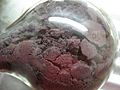
Red phosphorus
-
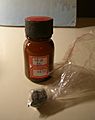
Arsenic
-
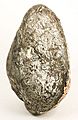
Antimony
-
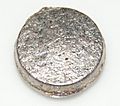
Bismuth
-
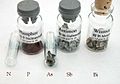
A collection of pnictogen samples


See also
 In Spanish: Pnictógeno para niños
