
Alberta facts for kids
Quick facts for kids
Alberta
|
|||
|---|---|---|---|
|
|||
| Motto(s):
Fortis et liber (Latin for 'strong and free')
|
|||
| Country | Canada | ||
| Confederation | September 1, 1905 (10th, with Saskatchewan) | ||
| Capital | Edmonton | ||
| Largest city | Calgary | ||
| Largest metro | Calgary Region | ||
| Government | |||
| • Type | Parliamentary constitutional monarchy | ||
| Area | |||
| • Total | 661,849 km2 (255,541 sq mi) | ||
| • Land | 640,082 km2 (247,137 sq mi) | ||
| • Water | 19,532 km2 (7,541 sq mi) 3% | ||
| Area rank | Ranked 6th | ||
| 6.6% of Canada | |||
| Population
(2021)
|
|||
| • Total | 4,368,370 | ||
| • Estimate
()
|
5,101,050 | ||
| • Rank | [[Population of Canada by province and territory|Ranked 4th in Canada]] | ||
| • Density | 6.82/km2 (17.7/sq mi) | ||
| Demonym(s) | Albertan | ||
| Official languages | English | ||
| GDP | |||
| • Rank | 3rd | ||
| • Total (2023) | CA$459.288 billion | ||
| • Per capita | CA$96,576 (1st) | ||
| HDI | |||
| • HDI (2023) | 0.943 ([[List of Canadian provinces and territories by Human Development Index|3rd]]) | ||
| Time zone | UTC−06:00 | ||
| Postal abbr. |
AB
|
||
| Postal code prefix |
T
|
||
| ISO 3166 code | CA-AB | ||
| Flower | Wild rose | ||
| Tree | Lodgepole pine | ||
| Bird | Great horned owl | ||
| Rankings include all provinces and territories | |||


Alberta is a beautiful province in Canada. It is part of Western Canada and is one of the three famous prairie provinces. Alberta has many different landscapes, from giant snowy mountains to wide open plains of golden grass. It shares borders with British Columbia to its west, Saskatchewan to its east, and the Northwest Territories to the north. To the south, it touches the U.S. state of Montana. Along with its neighbor Saskatchewan, Alberta is one of only two provinces in Canada that are completely surrounded by land.
The eastern part of the province lies inside the giant Great Plains, which are vast flat areas of land. The western part rises high into the stunning Rocky Mountains. Alberta has a continental climate with warm summers and very cold winters. The weather can change quite quickly because the air is often dry. In the winter, warm gusts called Chinook winds blow down from the mountains, quickly warming up the chilly land.
Alberta is the fourth-largest province by land size and also the fourth-largest by population. More than four million people call Alberta home. The capital city of the province is Edmonton. The largest city in Alberta is Calgary. Both cities have lots of fun things to do, including big sports arenas, parks, and science centres. Many people live in an area between these two major cities known as the Calgary–Edmonton Corridor.
People have lived in the region of Alberta for thousands of years. Early First Nations groups, such as the Plains Indians, lived on the grasslands and hunted the American bison. Later, European traders arrived to build wooden forts for the busy fur trade. Today, Alberta is famous for its farming, exciting cities, outdoor parks, dinosaur fossils, and energy resources like oil and natural gas.
Contents
- The Story Behind the Name of Alberta
- Exploring the Geography of Alberta
- Weather and Climate Across the Province
- Plants and Wildlife in Alberta
- The Ancient World of Dinosaurs
- History of Alberta
- People and Communities
- Economy and Industries
- Visiting Alberta: Tourism and Famous Sights
- Government and Leadership
- Schools and Universities
- Getting Around: Transportation in Alberta
- Exciting Sports and Teams
- Symbols of Alberta
- Images for kids
- See also
The Story Behind the Name of Alberta
Alberta was named in honor of Princess Louise Caroline Alberta, who lived from 1848 to 1939. She was the fourth daughter of Britain's famous Queen Victoria. Princess Louise was married to John Campbell, Marquess of Lorne, who served as the Governor General of Canada between 1878 and 1883. Other famous places in the province, including the sparkling blue Lake Louise and the tall peak Mount Alberta, were also named after her.
The name "Alberta" comes from the ancient name Albert, which was the name of Princess Louise's father, Prince Albert of Saxe-Coburg and Gotha. It comes from older Germanic languages words meaning "noble" and "bright." Because Princess Louise was so liked in Canada, leaders chose her middle name for this province.
Exploring the Geography of Alberta

Alberta covers an area of 661,848 km2 (255,541 sq mi), making it Canada's fourth-largest province. Only Quebec, Ontario, and British Columbia have larger land areas. Its southern boundary runs along the straight line of the 49th parallel north, forming the border with the United States. The northern edge follows the 60th parallel north, dividing it from the frozen lands of the Northwest Territories. To the east, the 110th meridian west forms the boundary with Saskatchewan.
On the western side, the boundary follows the 120th meridian west south from the north. It continues until it reaches the highest peaks of the Rocky Mountains. This high ridge of mountains is called the Continental Divide. Rain falling on one side flows toward the Pacific Ocean, while rain falling on the other flows toward the Arctic Ocean or Hudson Bay.
Alberta is very tall from north to south, stretching 1,223 kilometres (760 mi). At its widest point from east to west, it measures 660 km (410 mi). The highest point in the entire province is the summit of Mount Columbia, which reaches 3,747 metres (12,293 ft) high in the snowy Rockies. The lowest point is found along the Slave River in Wood Buffalo National Park, at an elevation of 152 m (499 ft).
Sparkling Lakes and Mighty Rivers

Alberta has many wonderful water resources that supply water for drinking, farming, and sports. Families love to visit these waters for swimming, boating, and fishing during sunny summer days. The province has three very large lakes. Lake Claire is found inside Wood Buffalo National Park. Lesser Slave Lake is a popular spot for camping and birdwatching in central Alberta. The massive Lake Athabasca lies partly in Alberta and partly in neighboring Saskatchewan.
Many long rivers travel across the province, beginning high up in the glaciers of the mountains. The longest river within the province is the Athabasca River, which runs 1,538 km (956 mi) from the cold Columbia Icefield all the way to Lake Athabasca. Another huge river is the Peace River, which carries giant amounts of water northward toward the Mackenzie River system. The North Saskatchewan River flows right through the capital city of Edmonton, providing drinking water and great city trails. In the south, the clear waters of the Bow River flow through Calgary, where many people enjoy paddling and trout fishing.
Varied Natural Landscapes and Regions
Alberta has several different natural landscapes that change as you travel across the province. The northern half is blanketed by the boreal forest, filled with spruce, pine, and birch trees. This forest is part of the largest land habitat in Canada and protects many animals. In the southwest, the steep Rocky Mountains are covered in thick coniferous forests belonging to the Alberta Mountain forests.
Across the southern part of the province, open grasslands stretch as far as the eye can see. This prairie includes shortgrass prairie in the dry south and mixed grass prairie further north. Between the southern grasslands and northern forests lies a crescent-shaped area known as the aspen parkland. It has rich, dark soil that makes it fantastic for growing crops and raising animals. Because the land is so good, most of the people in Alberta live in this central area.
In southeastern Alberta, visitors can explore a unique dry landscape called the badlands. The Red Deer River flows through this area, carving deep canyons and bizarre rock towers called hoodoos. Long ago, prehistoric rivers ran through these valleys, burying dinosaurs in mud and sand. Today, places like Dinosaur Provincial Park protect these badland areas, allowing visitors to walk where giant creatures once lived.
Weather and Climate Across the Province

Because Alberta stretches so far from north to south, its weather changes depending on where you are. The province experiences a humid continental climate, which brings hot, sunny summers and freezing, snowy winters. Alberta is one of the sunniest provinces in the whole country, receiving between 1,900 and 2,600 hours of bright sunshine each year. In northern towns, summer days are very long, with around 18 hours of continuous daylight.
Average winter temperatures in January vary greatly, from 0 °C (32 °F) in the mild southwest down to −24 °C (−11 °F) in the far north. Cold weather systems from the Arctic often bring freezing blasts of snow and wind across the plains. These fast-moving winter storms are sometimes called an Alberta clipper. When an Arctic front pushes south, temperatures can drop below −40 °C (−40 °F).
In southwestern Alberta, winter is often interrupted by an amazing natural event called a Chinook wind. Warm, dry winds blow down from the Rocky Mountains, melting snow rapidly and warming up the air in just a few hours. In the town of Pincher Creek, temperatures once shot up from −19 °C (−2 °F) to 22 °C (72 °F) in only one hour. The city of Lethbridge experiences around 30 to 35 Chinook days each year, giving residents a welcome break from winter.
In summer, average daytime temperatures range from 21 °C (70 °F) in mountain valleys to 28 °C (82 °F) on the sunny southern plains. Southeastern Alberta has a semi-arid climate and is part of a dry region known as the Palliser Triangle. This region receives very little rain, which means farmers rely on stored water for their crops. Summer can bring dramatic thunderstorms, especially near the mountains. The area between Calgary and Edmonton often sees strong storms that produce large hail. Alberta also gets around 15 tornadoes each year, making it an exciting place to study the weather.
Plants and Wildlife in Alberta
Wild Plants and Native Trees

When warm spring weather arrives, beautiful flowers begin to sprout through the melting snow. One of the very first flowers to appear is the furry prairie crocus, which belongs to the buttercup family. Soon after, the golden bean and the pink wild rose open their petals. In late summer, bright yellow wild sunflowers from the genus Helianthus light up the plains, alongside the prairie coneflower and fragrant sage plants.
In the parkland regions, green deciduous trees grow along hills and rivers. These include the shaking aspen, sturdy poplar, and flexible willow shrubs. In the north, vast evergreen forests spread for hundreds of kilometers. These forests contain tall conifers like the lodgepole pine, jack pine, and thick groves of black and white spruce. You can also find the tamarack, a rare needle-bearing tree that turns golden-yellow and drops its needles every single autumn.
Animals and Their Life Cycle

Alberta's varied habitats provide homes for many incredible creatures. The great open grasslands were once the historic home of millions of American bison. While wild herds were nearly wiped out during early settlement, caring people helped protect them. Today, bison live safely in nature preserves and on local ranches.
Many large plant-eating mammals, or herbivores, live across Alberta. Massive moose wander through wet river valleys, while elk, mule deer, and white-tailed deer hide among the trees. On the open southern prairie, speedy pronghorn dash across the grass. High up in the Rocky Mountains, bighorn sheep and agile mountain goats leap across sheer rock cliffs. Smaller creatures, like porcupines, bushy-tailed squirrels, and skunks, make their homes in every corner of the province.
Large predators, or carnivores, roam the forests and mountains. Powerful grizzly bears and curious black bears look for berries, roots, and fish. In spring, mother bears emerge from winter dens with tiny newborn cubs. In the life cycle of these bears, the young stay close to their mothers for a few years to learn essential hunting and survival skills. Packs of wolves and sneaky cougars hunt across the wilderness. Alberta is also home to swift coyotes, bushy-tailed red foxes, and wild cats like the Canada lynx and bobcat.
Thousands of birds fly into Alberta each spring to lay eggs and raise their young. Lakes in the north fill with loud swans, geese, diving ducks, and white pelicans. High above the fields, fierce eagles, hawks, and great horned owls hunt for field mice. In lakes and bubbling rivers, healthy fish swim, including rainbow trout, walleye, and the native bull trout, which is the official provincial fish. Alberta is also famous for its strict control programs that keep the province free of wild rats.
The Ancient World of Dinosaurs

Alberta is one of the most famous places in the whole world for finding dinosaur fossils from the Late Cretaceous period. Over 70 million years ago, Alberta was a warm, swampy coastal land filled with lush plants and giant trees. Many different types of dinosaurs lived, ate, and died along these ancient rivers. When they died, mud quickly buried their skeletons, turning their bones into stone over millions of years.
Scientists called paleontologists visit Alberta from all around the world to look for fossils. They have found complete dinosaur skeletons, fossilized eggs, and huge bone beds containing hundreds of preserved animals. Layers of rock, like the famous Dinosaur Park Formation and the Horseshoe Canyon Formation, are packed with treasures from the ancient past.
Many famous dinosaurs have been discovered in Alberta's badlands. Fossil hunters have found the duck-billed Edmontosaurus, the horned plant-eater Pachyrhinosaurus, the three-horned Triceratops, and fierce meat-eaters like Gorgosaurus and Tyrannosaurus. Today, you can see these incredible ancient skeletons standing tall at the world-famous Royal Tyrrell Museum of Palaeontology in the valley town of Drumheller.
History of Alberta
Early Indigenous Nations
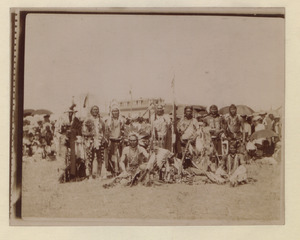
The first human beings arrived in what is now Alberta at least 10,000 years ago, near the end of the last ice age. Ancient Paleo-Indians crossed over an ice-free land connection called the Bering land bridge from Siberia into Alaska. From there, small bands of hunters traveled south along the Rocky Mountains and settled across the wide plains.
Over many generations, these early people formed distinct and proud nations. In the southern plains, groups like the Blackfoot Confederacy, the Blood Tribe, the Peigan, and the Plains Cree lived in close harmony with the land. They relied on the millions of buffalo that roamed the grasslands, using their meat for food, hides for warm tipis and blankets, and bones for tools. At Head-Smashed-In Buffalo Jump, hunters used clever strategies for thousands of years to guide buffalo herds over steep cliffs. In the northern forests, nations like the Woodland Cree and Chipewyan fished the lakes and hunted moose, deer, and caribou.
The Fur Trade Era and Early Explorers

During the 1700s, European explorers and traders arrived to trade with First Nations for valuable beaver furs, which were used to make fashionable felt hats in Europe. In 1754, an adventurous English trader named Anthony Henday became one of the first Europeans to explore the inland Alberta plains. French Canadian traders also traveled west, building deep relationships with Indigenous communities. Their children formed a distinct new cultural group known as the Métis.
During this period, two major trading companies competed fiercely: the Hudson's Bay Company (HBC) and the North West Company (NWC). In 1778, an American trader named Peter Pond built Fort Athabasca. Ten years later, in 1788, Roderick Mackenzie established Fort Chipewyan on the shores of Lake Athabasca.
Roderick's famous cousin, Sir Alexander Mackenzie, used Alberta as a base for daring explorations. He followed the mighty Mackenzie River all the way north to the Arctic Ocean. In 1793, he paddled up the Peace River, crossed through the snowy Rocky Mountains, and reached the Pacific Ocean, becoming the first European to cross northern North America. Eventually, in 1821, the British government merged the rival fur companies into one single business, the Hudson's Bay Company.
Becoming a Province
In 1870, the young country of Canada bought a huge territory called Rupert's Land from the Hudson's Bay Company. This territory included the land that would become Alberta. The Canadian government made agreements called the Numbered Treaties with local First Nations, including Treaty 6, Treaty 7, and Treaty 8. Through these treaties, the Crown gained access to the land, promising reserves, schools, farming tools, and ongoing hunting rights.
In 1882, the Canadian government created the District of Alberta as a part of the vast North-West Territories. The completion of the Canadian Pacific Railway in the 1880s changed everything. Trains brought thousands of new families from Europe, eastern Canada, and the United States to farm the prairie lands. Towns sprang up quickly along the railway lines, and farming grew into a booming business.
On September 1, 1905, the Canadian Parliament passed the Alberta Act, officially welcoming Alberta as Canada's tenth province. The city of Edmonton was chosen as the capital, and Alexander Cameron Rutherford became its very first premier. Farmers planted huge fields of golden wheat, and ranchers grazed herds of cattle across the southern hills.
Modern History and Growth
The new province faced difficult times during the early 20th century. During the First World War, many young Albertans volunteered to serve overseas. Soon after, the global 1918 flu pandemic swept through towns and cities, closing schools and public halls. The Great Depression brought severe dry spells and falling crop prices, making life very hard for prairie families.
Everything changed on a cold winter day in February 1947. Workers drilling at a well called Leduc No. 1, south of Edmonton, struck a massive pool of crude oil underground. The discovery launched an oil boom that brought jobs, new roads, modern schools, and thousands of new residents to the province. In the 1960s, companies began finding ways to safely extract thick oil from the northern Athabasca oil sands near Fort McMurray.
Alberta has faced natural challenges in recent years. In June 2013, days of heavy rain caused major flooding along the Bow, Elbow, and Oldman rivers, covering parts of downtown Calgary in muddy water. In May 2016, a huge forest fire known as the 2016 Fort McMurray wildfire swept through the northern forests, forcing more than 80,000 people to leave their homes safely. In both events, communities worked closely together to rebuild stronger than before.
People and Communities

According to the 2021 Canadian census, Alberta had a population of 4,262,635 people. By late 2024, estimates showed the population grew to nearly five million residents. Alberta has one of the youngest populations among Canadian provinces, with a median age of around 37 years. It also has a high percentage of children under the age of 14, making it a lively place full of bustling schools and sports teams.
About 81% of Albertans live in vibrant cities and towns, while about 19% live in peaceful rural areas. The most populated area is the Calgary–Edmonton Corridor, which connects the province's two biggest cities along Highway 2. People from all over the world move to Alberta because of its friendly communities, good jobs, and scenic nature.
Cities and Towns
The province has many exciting cities, each with its own special character. Calgary is the largest city, known for its glassy downtown skyscrapers, busy businesses, and western spirit. It sits right where the prairies meet the foothills of the Rockies. Edmonton is the provincial capital and second-largest city. It is famous for its wide green river valley, top universities, and exciting summer festivals.
Between Calgary and Edmonton lies Red Deer, a growing city surrounded by fertile farmland. In the sunny south, Lethbridge features tall railway bridges and lots of sunshine, while Medicine Hat is famous for its clay pottery and natural gas wells. To the north, Grande Prairie serves as the busy trading hub of the Peace River region, and Fort McMurray serves as the centre of northern energy production.
Many Languages and Cultures
People from all kinds of cultural backgrounds call Alberta home. The most widely spoken language is English, which is understood by almost everyone in daily life. Because families have moved to Alberta from all across the globe, you can hear many other languages spoken in schoolyards and shopping centres. These include Tagalog, Punjabi, Spanish, Hindi, Mandarin, Cantonese, Arabic, German, and French.
Many people also speak traditional Indigenous languages, such as Cree, Blackfoot, and Dene. Alberta also has an active French-speaking community called Franco-Albertans, with roots stretching back to early trading days.
Alberta celebrates its wonderful diversity. Many residents trace their family roots back to England, Scotland, Ireland, and France. Others have ancestors from Germany, Ukraine, Poland, the Netherlands, and Scandinavian countries like Norway. In recent decades, many families have arrived from the Philippines, India, China, and various countries in Africa and South America. About 6.8% of the population are Indigenous, including members of First Nations, the Métis Nation, and Inuit families.
Economy and Industries

Alberta has one of the strongest economies in Canada. For many years, the province was best known for its two traditional pillars: farming and energy. Today, its economy has expanded to include high-tech computer companies, green energy, modern factories, and world-class tourism.
Farming and Ranching

Farming is a vital part of life in Alberta. The province is famous worldwide for producing top-quality beef. Alberta raises more than three million head of cattle, which accounts for about 40% of all Canadian beef. Ranchers also raise sheep for wool, as well as large herds of American bison.
On the wide open fields, farmers grow millions of tons of spring wheat, which is ground into flour for bread, pasta, and baked goods. They also grow massive fields of canola, which blooms with bright yellow flowers in the summer. Canola seeds are pressed to create healthy cooking oil. Farmers also grow barley, oats, peas, and sugar beets.
Alberta is also Canada's top province for beekeeping. Around 40% of all Canadian honey bees live here. Beekeepers keep hives in southern barns over the cold winter, then move the busy bees north to the Peace River valley in summer. There, bees pollinate sweet clover and purple fireweed, making delicious prairie honey.
Energy and Natural Resources

Alberta holds some of the world's largest supplies of energy. Beneath the soil lie huge deposits of conventional crude oil and natural gas. Alberta produces about 84% of all the oil in Canada, sending fuel to homes, cars, and factories all across North America. Pipelines carry natural gas to heat schools and homes during cold winter months.
In the north around Fort McMurray, oil is trapped in a mixture of sand, clay, and water called the Athabasca oil sands. Companies use giant electric shovels and big dump trucks to mine the sand, or they pump warm steam deep underground to separate the thick oil, called bitumen. While this provides many jobs, scientists and engineers are constantly inventing new technologies to reduce water use and protect the environment.
Alberta is also investing in cleaner forms of energy. In the windy south, hundreds of giant wind turbines spin across the prairie grass to make electricity. Large fields of solar panels capture the bright sunshine, turning light into clean power for homes and businesses.
Manufacturing, Tech, and Services
Most Albertans work in the service sector, which includes helpful everyday jobs in schools, hospitals, banks, retail shops, and restaurants. In cities like Calgary and Edmonton, thousands of computer programmers and software engineers work in growing technology companies, designing new apps, computer systems, and games.
Factories in Alberta manufacture valuable products from raw materials. Metal shops make heavy equipment for construction and farming. In central cities like Red Deer and Edmonton, chemical plants turn natural gas into useful plastics like polyethylene, which are shipped around the world to make toys, containers, and medical equipment. Food processing plants also turn fresh local milk, meat, and grains into tasty foods for grocery store shelves.
Visiting Alberta: Tourism and Famous Sights

Every year, millions of curious travelers from across the globe visit Alberta to see its breathtaking scenery and lively festivals. Alberta is home to six remarkable UNESCO-designated World Heritage Sites. These include the towering Canadian Rocky Mountain Parks, Dinosaur Provincial Park, Head-Smashed-In Buffalo Jump, Waterton-Glacier International Peace Park, Wood Buffalo National Park, and Writing-on-Stone Provincial Park, where ancient Indigenous rock carvings decorate sandstone cliffs.
In Banff National Park and Jasper National Park, visitors can see bright blue glacier-fed lakes, like Moraine Lake and Lake Louise. The two parks are connected by the scenic Icefields Parkway, one of the most beautiful mountain highway drives on Earth. Along the drive, visitors can look up at glaciers, rushing waterfalls, and jagged peaks. In winter, skiers and snowboarders visit world-class mountain resorts like Banff Sunshine and Lake Louise Ski Resort.
In summer, over one million people put on cowboy boots and hats to attend the famous Calgary Stampede. This ten-day festival celebrates western cowboy heritage with thrilling rodeo events, chuckwagon races, pancake breakfasts, and musical performances. In Edmonton, visitors love going to K-Days, a huge summer fair filled with rides and food, and exploring the enormous West Edmonton Mall, which was once the biggest shopping mall in the world and contains an indoor amusement park and giant waterpark!
Government and Leadership

Alberta is governed through a parliamentary democracy. The people of the province elect 87 representatives to the Legislative Assembly of Alberta. These elected members meet inside the grand Alberta Legislative Building in Edmonton to debate, create, and vote on laws.
Because Canada is a constitutional monarchy, Charles III serves as the King of Canada and the official head of state. The King's representative in the province is the Lieutenant Governor of Alberta, currently Salma Lakhani. The lieutenant governor's duties are mostly ceremonial, like officially signing bills into law and greeting special international guests.
The actual leader of the provincial government is the Premier of Alberta, currently Danielle Smith. The premier is usually the leader of the political party that wins the most seats in a provincial election. The premier and their team of cabinet ministers make important decisions about provincial healthcare, schools, highways, and public services. In a historic province-wide referendum held in 2026, the majority of Alberta citizens proudly voted to stay an active part of Canada.
Schools and Universities
Kids in Alberta attend kindergarten through Grade 12 in high-quality schools. The provincial department of education, called Alberta Education, sets the lessons and curriculum that students study every day. There are public schools, separate Catholic schools, Francophone schools for French speakers, charter schools, and private schools. Some children also learn from home through homeschooling.
After finishing high school, students can continue their learning at world-class colleges and universities. The oldest and largest university in the province is the University of Alberta in Edmonton, famous for its medical research and science labs. In the south, the University of Calgary and the University of Lethbridge welcome thousands of students every year.
Alberta also has excellent technical schools, such as the Northern Alberta Institute of Technology (NAIT) in Edmonton and the Southern Alberta Institute of Technology (SAIT) in Calgary. At these schools, students learn practical trades, becoming skilled electricians, mechanics, chefs, computer builders, and carpenters.
Getting Around: Transportation in Alberta

Alberta has a huge network of roads, trains, and planes to help people and goods travel smoothly across the huge province.
Roads and Highways
Alberta has over 473,000 km (294,000 mi) of roadways. The most famous road is Highway 2, a wide highway that connects the cities of Calgary and Edmonton. The busy section between these two cities was officially named the Queen Elizabeth II Highway in honor of the royal visit in 2005.
The famous Trans-Canada Highway runs east to west across southern Alberta, passing through Medicine Hat, Calgary, and into the Rocky Mountains toward British Columbia. In the north, the Yellowhead Highway carries travelers through Edmonton and into Jasper National Park. Beautiful scenic routes like Alberta Highway 22, known as the Cowboy Trail, offer views of rolling hills and horse ranches.
Flying and Taking the Train
For long-distance travel, Alberta has two major air hubs: Calgary International Airport and Edmonton International Airport. These busy airports connect Albertans with major cities across Canada, the United States, Europe, Mexico, and the Caribbean.
Trains have been a major part of Alberta's history for over a century. Massive freight trains operated by Canadian National Railway (CN) and Canadian Pacific Kansas City (CPKC) carry grain, lumber, and products across the country. Passengers can also ride on Via Rail passenger trains to view the snowy peaks of Jasper National Park, or take the scenic Rocky Mountaineer tourist train through the mountains. In Calgary and Edmonton, electric light rail transit trains, such as the Calgary CTrain, make it easy for people to travel to school, work, and sports games without needing a car.
Exciting Sports and Teams
Albertans love sports, both playing them and cheering on their favorite teams. Because of its cold winters, ice hockey is hugely popular. The province has two teams in the famous National Hockey League (NHL): the Edmonton Oilers and the Calgary Flames. Whenever these two teams play each other, fans call it the thrilling Battle of Alberta!
During the summer and fall, fans pack stadiums to watch the Canadian Football League (CFL). The Edmonton Elks play at Commonwealth Stadium, while the Calgary Stampeders play at McMahon Stadium. Alberta also has professional soccer teams like Cavalry FC, fast-paced basketball teams like the Calgary Surge and Edmonton Stingers, and local baseball clubs like the Edmonton Riverhawks. In winter, families head to the mountains to enjoy downhill skiing, snowboarding, ice skating, and snowshoeing on fresh powder snow.
Symbols of Alberta
Alberta has several official provincial symbols that represent its unique history and natural wonders:
- Provincial flower: The sweet-smelling wild rose, which grows naturally along roadsides and forest paths.
- Provincial tree: The tall and slender lodgepole pine, once used by First Nations to construct sturdy tipis and later by pioneers for railway ties.
- Provincial bird: The watchful great horned owl, known for its silent flight and deep hooting call at night.
- Provincial mammal: The sure-footed bighorn sheep, which climbs the high cliffs of the Rocky Mountains.
- Provincial fish: The clean-water-loving bull trout.
- Provincial stone: Petrified wood, which is ancient wood that turned to stone over millions of years.
- Provincial motto: Fortis et liber, which is Latin for "Strong and free."
Images for kids
-
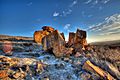
Red Rock Coulee in southeastern Alberta features unique sandstone shapes and dry steppe.
-

An educational poster from 1948 about Alberta's famous rat-control program.
-
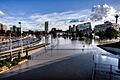
Flooding along the Bow River in downtown Calgary during the major floods of June 2013.
-
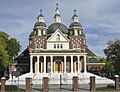
St. Josaphat Ukrainian Catholic Cathedral in Edmonton shows beautiful eastern European architecture.
-
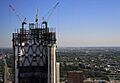
Looking out over construction and skyscrapers from the high Calgary Tower in 2010.
-
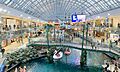
The indoor lake and pirate ship attraction inside the massive West Edmonton Mall.
-
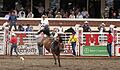
A cowboy rides a bucking horse during the exciting Calgary Stampede rodeo.
-
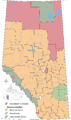
A map showing the boundaries of rural and specialized municipalities across Alberta.
-
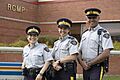
Officers of the Royal Canadian Mounted Police on duty in the city of St. Albert.
-

Traditional Scottish Highland dancers performing at Spruce Meadows in Calgary.
-
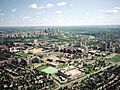
The historic brick buildings and green quad of the University of Alberta campus in Edmonton.
-
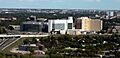
Foothills Medical Centre in Calgary is one of the largest care and research hospitals in Alberta.
-
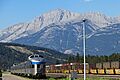
A Via Rail passenger train stopping at the mountain station in Jasper.
-
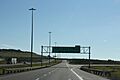
The intersection of the Trans-Canada Highway and the scenic Cowboy Trail in southern Alberta.


See also
 In Spanish: Alberta para niños
- Index of Alberta-related articles
- Outline of Alberta
- Symbols of Alberta
